

 +86
17853698681
+86
17853698681
 Current
location:
Current
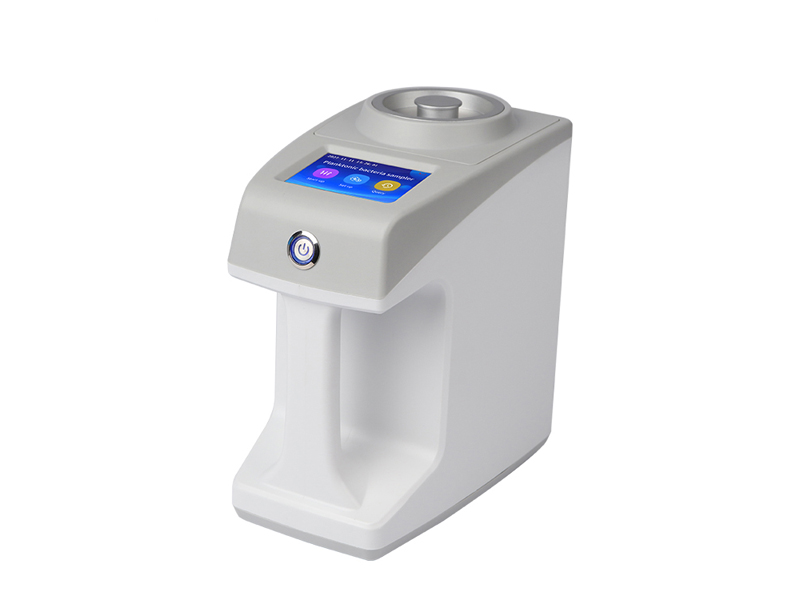
location:In industries such as pharmaceuticals, healthcare, and food processing, accurately detecting microbial concentrations within cleanrooms is crucial. As an efficient porous inhalation dust and bacteria sampler, the planktonic bacteria sampler can accurately reflect the microbial status of cleanrooms, providing strong support for testing across various industries.
1. Instrument design principle
The planktonic bacteria sampler is meticulously designed based on the particle impact principle and isokinetic sampling theory. During the sampling process, the wind speed at the sampling port is essentially consistent with that in the clean room. This design facilitates more direct sampling and can more accurately reflect the microbial concentration within the clean room. When the dust-laden air passes through the micropores at high speed, it is precisely impacted on the agar surface inside the petri dish. After collection, simply cover the agar petri dish and, under a suitable cultivation environment, these viable microorganisms undergo a kinetic rehydration process, leading to rapid growth, thereby significantly reducing the time required to obtain results.
2. Exquisite instrument structure
The planktonic bacteria sampler boasts a unique and innovative structure, consisting of two parts: the upper and lower sections. The upper section integrates the collection port, sampling base, and air pump, while the lower section houses the controller and battery. The collection port and shell are crafted from high-quality aviation aluminum, a material that is not only sturdy and durable but also features a closed-cell surface treatment. This makes it highly convenient for sterilization and disinfection before use, effectively preventing external factors from interfering with the sampling results and ensuring accurate detection.
3. Distinctive Product Features
Convenient Handheld Design: The new handheld design is elegant and aesthetically pleasing, allowing operators to easily carry out sampling work, greatly enhancing the convenience of use.
Efficient touch screen control: The color touch screen control design makes operation more efficient and quick. Operators can easily set various parameters and view sampling progress through the touch screen.
Clear parameter display: The LCD display can clearly show key parameters such as sampling volume and sampling time, facilitating operators to understand the sampling status in real time.
Parameter grouping storage: The instrument is equipped with the function of storing parameters such as sampling volume and sampling time in groups, facilitating subsequent data management and analysis.
Easy replacement of petri dishes: The operation of replacing petri dishes is very simple. Simply remove the sampling port and the replacement can be easily completed, saving operation time and effort.
Thermal printing function: Equipped with a thermal printer, it can easily print out sampling data, facilitating on-site recording and reporting.
Upper computer software support: With the upper computer software, data can be exported to a computer, facilitating historical analysis and helping to gain a deeper understanding of the changing trends in microbial concentration within the clean room.
AC/DC Dual-Purpose: Equipped with a 6000mAh high-capacity lithium battery, it can continuously sample for 8 hours and supports both AC and DC power, meeting the usage needs in various scenarios.
Multilingual program: The program supports both Chinese and English, making it convenient for operators from different regions and linguistic backgrounds to use.
4. Follow relevant standards
The planktonic bacteria sampler strictly adheres to multiple relevant standards, including GB/T16293 - 2010 "Test Method for Planktonic Bacteria in Clean Rooms (Areas) of Pharmaceutical Industry", ISO14698 - 1/2 "Biological Contamination Control in Clean Rooms and Related Controlled Environments", and GMP "Good Manufacturing Practice for Drugs and Food". Compliance with these standards ensures the scientificity and standardization of the instrument during the testing process, making its test results more credible and authoritative.
The planktonic bacteria sampler, with its unique design principle, exquisite structure, notable features, and strict adherence to standards, has become one of the commonly used tools for detecting microbial concentration in clean environments across various industries, playing a significant role in ensuring product quality and public health safety.
Article address:https://www.cleanlinesstesting.com/news1/50.html