

 +86
17853698681
+86
17853698681
 Current
location:
Current
location:In public places such as shopping malls, subway stations, hospitals, etc., bacteria, viruses, and fungi hidden in the air constantly threaten public health. As an "invisible guardian" for monitoring air quality, the air microbial sampler builds a defense line for respiratory health through technological innovation.
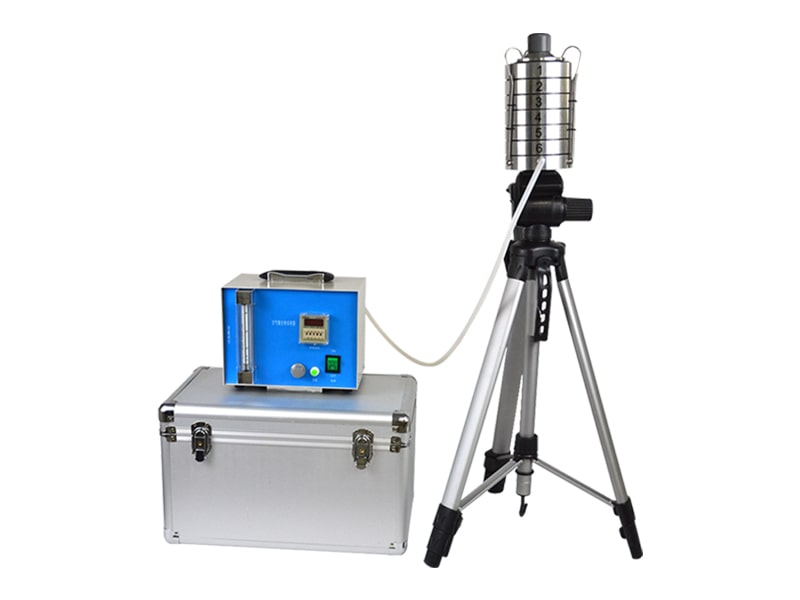
Core principle: Biomimetic design, precise capture
The air microbial sampler is mainly based on the impact method (internationally recognized as the best method), which generates negative pressure through a vacuum pump to allow microbial aerosols to impact the surface of the culture dish. Among them, the six stage impact sampler is the most advanced:
Simulating human respiratory tract: The aperture of the 6-layer aluminum disk is gradually reduced to capture particles of different sizes. Levels 1-2 correspond to the upper respiratory tract, while levels 3-6 correspond to the lower respiratory tract, accurately replicating the deposition process of microorganisms in the lungs.
Survival rate optimization: The humidity during sampling is increased from 39% (first level) to 88% (sixth level) to protect the activity of vulnerable pathogens (such as viruses) and improve detection accuracy.
Technological Innovation: Intelligent and Efficient, Direct Cost Reduction
The new generation of samplers integrates intelligence and IoT technology, achieving three major breakthroughs:
Portable and easy to use: Handheld design (only 1.6kg), equipped with touch screen and Chinese English interface, supports one click parameter setting.
Low cost operation and maintenance: compatible with standard culture dishes, with a single cost reduction of 60% compared to traditional equipment; Equipped with a large capacity battery, it can last for up to 8 hours.
Real time monitoring: Upload data to the cloud through Wi Fi, support viewing through mobile apps, and 200 sets of storage capacity to meet monthly monitoring needs.
Application scenario: closed-loop management from warning to intervention
Transportation hub: Shanghai Hongqiao Station has deployed 20 devices, combined with AI to identify influenza viruses, and has issued a 48 hour early warning of abnormal virus concentration to avoid clustered infections.
Educational institutions: Primary and secondary school classrooms dynamically adjust the air conditioning dehumidification mode by monitoring the concentration of mold during the rainy season, reducing the concentration from exceeding the standard (>50 CFU/m ³) to a safe value (<20 CFU/m ³).
Medical pharmaceuticals: used in clean workshops and hospital ICUs to prevent cross infection; The pharmaceutical industry ensures product quality through compressed air testing.
Social Value: Win win for Health and Economy
Reduce disease risk: For every 10 CFU/m ³ decrease in microbial concentration, the respiratory infection rate decreases by 5%.
Economic benefits highlighted: Due to the optimization of air quality, the shopping mall has extended customer stay time by 12 minutes and increased daily sales by 3%; Reduce air conditioning energy consumption by 20% and save over 500000 yuan in annual electricity bills.
Future trend: Global perception, proactive prevention and control
With the application of 5G and IoT technology, samplers are evolving towards "grid monitoring":
Build a microbial pollution prediction model by combining meteorological and human flow data;
The public obtains real-time data through the APP, forming a collaborative governance of "government enterprise public".
From the operating room to the subway station, air microbiological samplers are guarding every breath with the power of technology. In the future, it will become the 'healthy nerve endings' of smart cities, exposing invisible threats.
Article address:https://www.cleanlinesstesting.com/news1/31.html