

 +86
17853698681
+86
17853698681
 Current
location:
Current
location:In the fields of food safety, water quality monitoring, and healthcare, rapid screening and precise quantification of microbial contamination are key links in ensuring public safety. The microbial rapid detection instrument has achieved the integration of multi sample parallel processing, precise incubation control, and intelligent data analysis through technological innovation, providing efficient microbial detection solutions for various industries.
Technological breakthroughs in microbial detection
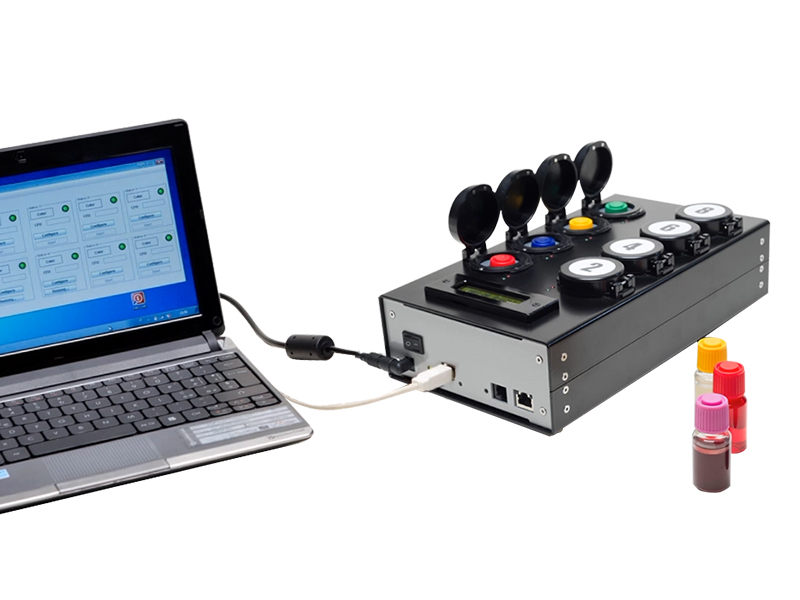
The core breakthrough of microbial rapid detection instrument lies in its high-throughput detection capability. The instrument supports simultaneous detection of 8 independent samples at the same temperature, with each sample requiring only 1ml or 1g, effectively improving batch detection efficiency. This design is particularly suitable for scenarios that require rapid screening of a large number of samples, such as food processing line monitoring, water quality surveys, and emergency response.
Technical Implementation of Parallel Detection of 8 Samples
The parallel detection capability of the microbial rapid detector is based on a precise temperature control system and independent detection channels. The instrument adopts an intelligent temperature control module, which can automatically adjust and maintain the incubation temperature, ensuring that 8 detection bottles react synchronously under the same conditions. Each detection channel works independently and does not interfere with each other, ensuring the accuracy of the detection results.
Technical parameters show that the sensitivity of this microbial rapid detector can reach the level of detecting single target microorganisms, with a specificity of up to 99.999%. This high performance is attributed to the special design of the RVL detection bottle, which integrates the advantages of traditional culture dish method, enzyme method, immune method, and gene method, and can be directly detected without sample pretreatment.
Coverage of detection range for multi scenario applications
The microbial rapid detector has a wide detection range, covering major microbial indicators such as total viable bacteria, coliforms, fecal coliforms, Escherichia coli (including serotypes O157, O111, O104, etc.), Enterobacteriaceae, Staphylococcus aureus, Pseudomonas aeruginosa, Salmonella, Listeria monocytogenes, Enterococcus, and yeast.
In practical applications, this microbial rapid detector demonstrates its adaptability:
In the food industry, support rapid monitoring of HACCP system
In water quality testing, rapid screening of water sources, water treatment plants, and distribution networks can be achieved
Provide timely quality control in the production process of drugs and cosmetics
Assist in epidemic monitoring and import/export supervision at the Centers for Disease Control and Prevention and inspection and quarantine departments
Convenient operation and reliable detection
The design concept of microbial rapid detection instrument emphasizes user friendliness. The instrument operation only requires three simple steps: adding the sample, placing the detection bottle into the instrument, and reading the results. This "foolproof" design reduces the professional requirements for operators, allowing even non professionals to quickly master it.
During the detection process, the instrument independently and continuously monitors and records the number of microorganisms (CFU) in each detection bottle, achieving quantitative analysis. The portable design allows testing to no longer be limited to the laboratory and can be conducted anytime, anywhere. After the detection is completed, the instrument can be directly connected to a computer to generate quantitative analysis reports, meeting the document requirements of different scenarios.
Compared with traditional microbial detection methods, this microbial rapid detector has a detection speed that is 2 to 5 times faster, greatly reducing decision-making time. The detection bottle can be safely disposed of after use, and the handling method is the same as expired drugs, avoiding the risk of biological contamination.
With the continuous improvement of microbial detection requirements in various industries, the technological innovation of microbial rapid detectors is developing towards higher throughput, stronger intelligence, and more convenient operation. The ability to simultaneously detect 8 samples not only significantly improves work efficiency, but also ensures the reliability of results through precise temperature control and detection systems.
Article address:https://www.cleanlinesstesting.com/news2/69.html