

 +86
17853698681
+86
17853698681
 Current
location:
Current
location:The integrated air microbial sampling and detection machine is an intelligent detection device that integrates functions such as high flow air sampling, microbial enrichment, ATP fluorescence rapid detection, automatic data processing and transmission. It can quickly collect microbial particles in the air on site, enrich microorganisms into liquid through efficient solid gas separation technology, and quickly detect the ATP (adenosine triphosphate) content in microorganisms based on the "firefly luminescence principle", thereby calculating the concentration of live microorganisms in the air.
This device achieves a high degree of integration of "sampling+detection+data management", greatly simplifying the complex two-step process of sampling and laboratory analysis in traditional microbial monitoring. It is suitable for application scenarios that require fast response, real-time monitoring, and data traceability.
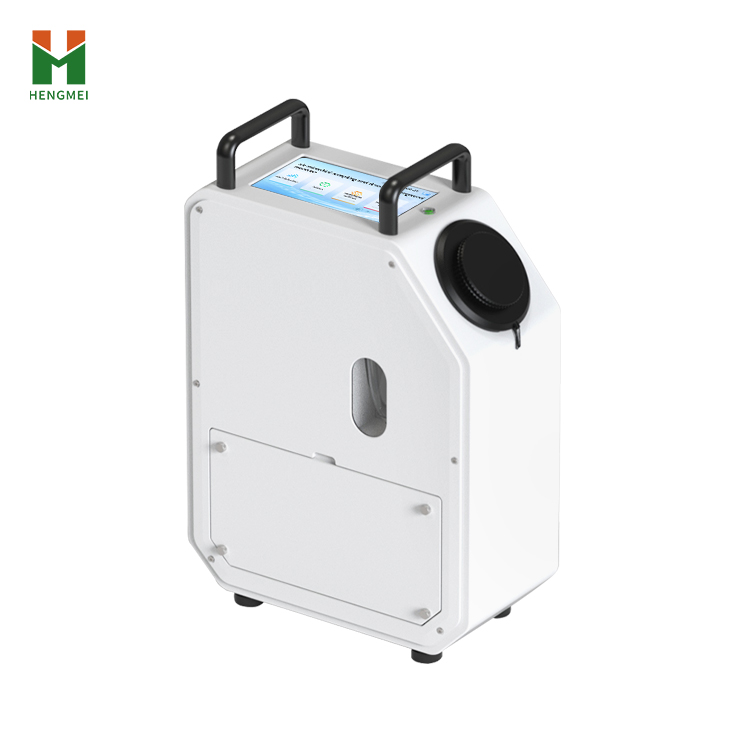
Core technical principles:
The workflow of this integrated air microbial sampling and detection machine combines efficient physical collection with sensitive biochemical detection technology.
1. Efficient sampling: Dry wall cyclone solid gas separation technology
Principle: The built-in high flow fan of the instrument draws in air at a flow rate of up to 245L/min. The airflow forms a high-speed vortex in a special dry wall cyclone chamber, using strong centrifugal force to separate microbial particles from the gas phase and enrich them in a collection tube containing sterile distilled water.
Advantages: This physical capture method has a collection efficiency of up to 92% and has little impact on microbial activity, avoiding the potential bacterial damage caused by traditional impact sampling and laying a solid foundation for subsequent activity detection.
2. Rapid detection: ATP bioluminescence method
Principle: The detection core is based on the "firefly luminescence principle". In the liquid enriched with microorganisms, the instrument automatically adds reagents containing luciferase and luciferin. All living microbial cells contain constant ATP (adenosine triphosphate), which undergoes biochemical reactions with the aforementioned reagents, converting chemical energy into light energy and producing fluorescence.
Signal capture: The weak fluorescence emitted by the reaction is captured and amplified by a highly sensitive MPPT silicon photomultiplier tube detector, and converted into an electrical signal. Relative Luminescence (RLU) is directly proportional to the ATP content in the sample, and then positively correlated with the number of live microorganisms.
Performance boundary: The sensitivity of this technology is extremely high, with an ATP detection limit of up to 10 ⁻¹² mol. It can complete a detection cycle in a very short time of 2 to 180 seconds, achieving a fast closed-loop from sampling to result output.
Technical essence: This device combines "physical centrifugation enrichment" with "biochemical fluorescence detection" to convert trace and invisible microbial contamination in the air into quantifiable and transferable electronic data, achieving automation and digitization of monitoring.
Technical advantages and performance indicators:
1. Efficiency and High Throughput
Integrated sampling and testing: fundamentally eliminating the pollution risks and time delays caused by sample transportation and manual intervention.
High throughput sampling: With a high flow rate design of 245L/min, it means that the volume of air collected in the same time is several to tens of times that of traditional low flow samplers, making it more representative for monitoring low concentration microorganisms and significantly improving the sensitivity and reliability of monitoring.
2. Intelligent data management and interconnection
Android intelligent platform: equipped with Android operating system and 7-inch touch screen, intuitive operation, real-time viewing of data curves and device status.
Cloud data ecosystem: Supports WIFI/4G networking, data can be wirelessly uploaded to cloud platforms, combined with supporting data management software, supporting long-term trend analysis, risk assessment, and report generation.
3. On site adaptability
Portable and Long Range: The entire machine weighs only 8kg, has a compact size, and adopts a dual-purpose design for both AC and DC. The built-in battery has a standby time of ≥ 10 hours, making it perfect for mobile detection and long-term monitoring of fixed points in emergency situations.
Environmental adaptability: It can work stably at an ambient temperature of 18-45 ℃, meeting most indoor and outdoor application scenarios.
Application areas:
The integrated machine for air microbial sampling and detection is widely used in the following fields and is an important tool for biosafety, environmental control, and industrial quality management:
Disease prevention and control: epidemic emergency response, hospital infection control, rapid on-site testing for disease control
Pharmaceutical industry: Microbial monitoring of clean workshops, sterile filling areas, and fermentation tank environments
Food industry: Microbial contamination detection in production workshops, packaging areas, and raw material warehouses
Biological cleanroom: laboratory, electronic cleanroom, biosafety cabinet environmental monitoring
Environmental Protection: Indoor and Outdoor Air Quality Assessment, Microbial Pollution Source Tracking
Public places: hygiene monitoring in densely populated areas such as schools, stations, airports, shopping malls, etc
Teaching and Research: Microbiology Experimental Teaching, Data Collection and Analysis of Research Projects
The integrated air microbial sampling and detection machine is becoming an important tool in the field of modern microbial monitoring due to its outstanding performance in integrated sampling and detection, efficient high flow sampling, ATP fluorescence rapid detection, and intelligent data management. It not only greatly improves detection efficiency and data accuracy, but also provides reliable technical support for disease prevention and control, industrial production, environmental governance, and scientific research exploration.
Article address:https://www.cleanlinesstesting.com/news1/70.html