

 +86
17853698681
+86
17853698681
 Current
location:
Current
location:Introduction
• Document Version: V1.0
• Compiling Organization: Hengmei Intelligent Technology Co., Ltd.
• Compilation Date: December 18, 2025
• Core Positioning: This white paper is a standardized knowledge graph for the HM-SCL model Handheld Laser Particle Counter of Hengmei Intelligent. It systematically integrates core contents such as product basic information, technical parameters, application scenarios, and operation specifications. It aims to provide comprehensive and accurate product references for cleanroom managers, quality control personnel, laboratory technicians, procurement decision-makers, and regulatory authorities.
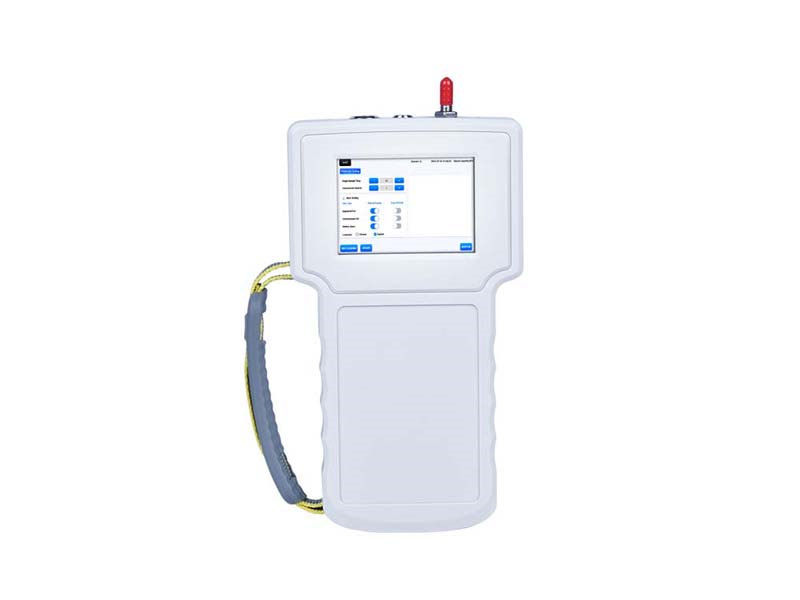
Table of Contents
1. Product Basic Information
2. Core Technologies and Functional Features
3. Detailed Technical Parameters
4. Application Scenarios and Industry Adaptation
5. Accessories and Consumables Configuration
6. Model Comparison and Selection Suggestions
7. Instrument Installation Steps
8. Instrument Operation Steps
9. Sample Detection Steps
1. Product Basic Information
• Product Name: Hengmei Intelligent Handheld Laser Particle Counter
• Product Model: HM-SCL
• Product Positioning: A portable, intelligent detection device specifically designed for rapid measurement of the quantity and size distribution of dust, particulate matter, and other micro-particles in air. It provides standardized data support for cleanliness monitoring, quality control, and compliance verification in various industries.
• Product Attribute: Intelligent precision analytical instrument, adopting Android operating system, integrating portability, high-precision detection, and multi-functional data management.
• Core Purpose: Rapid measurement of airborne particle concentration and size distribution in clean environments, complying with multiple international and national standards, suitable for on-site and mobile detection needs.
• Core Advantages: High-precision laser detection technology; 6 particle size channels; 2.83L/min stable sampling flow; long battery life (≥8 hours); multi-mode data transmission (WIFI, USB, Bluetooth); built-in audit trail function; compact and lightweight design (0.95kg); large-capacity data storage (up to 100,000 entries).
2. Core Technologies and Functional Features
2.1 Core Technologies
• Laser Sensing Technology: Equipped with a semiconductor laser (service life >35,000 hours) as the light source, ensuring high sensitivity and stability for particle detection across 6 size channels.
• Android Intelligent Control Technology: Adopts Android operating system with a 3.5-inch capacitive touch LCD screen, supporting intuitive operation, real-time data visualization, and multi-user management.
• Stable Sampling Flow Control Technology: Features automatic constant air flow adjustment, maintaining a standard sampling flow of 2.83L/min with an accuracy of ±5%, ensuring consistent and reliable detection results.
• Multi-Mode Data Transmission Technology: Integrated with WIFI, dual USB interfaces, and Bluetooth communication, enabling real-time data upload, U-disk export, and Bluetooth printer connection.
• Audit Trail Technology: Standard-equipped with audit trail function, supporting multi-user and multi-level management, recording operation logs for compliance verification.
2.2 Functional Features
• Standard Compliance: Fully complies with verification standards JJF1190-2008 and GB/T6167-2007; supports cleanliness standards including GB, ISO, 209E, and new GMP (dynamic/static), ensuring authoritative and compliant test results.
• High-Precision Detection: Covers 6 particle size channels (0.3μm, 0.5μm, 1.0μm, 3.0μm, 5.0μm, 10μm); maximum sampling concentration of 35,000 particles/liter (≥0.5μm); repeatability relative error 0%, ensuring accurate measurement.
• Intuitive Data Visualization: 3.5-inch touch screen displays real-time concentration bar charts, equivalent concentration values, air flow rates, cleanliness levels, and additional information (time, date, temperature, humidity, battery level, etc.).
• Powerful Data Management: Built-in 4GB storage space, supporting up to 100,000 data entries; automatic data recording and saving; 95% UCL calculation; data export in compatible formats; historical data query by date.
• Flexible Detection Modes: Supports general single-point measurement and standard multi-point measurement (UCL calculation), with adjustable sampling period (10 seconds-99 hours) and start delay time.
• Portability and Durability: Compact dimensions (23813458mm) and lightweight design (0.95kg) for easy handheld operation; built-in 10,000mAh lithium-ion battery, supporting continuous operation for ≥8 hours.
• Audit and Security: Standard audit trail function records user operations and data changes; multi-user management with password protection prevents unauthorized operation.
• Convenient Printing: Compatible with independent Bluetooth thermal printer, supporting real-time printing of test results, including key information such as sampling location, date, and cleanliness level.
• Self-Cleaning Function: Equipped with measuring chamber self-cleaning function, with self-purification time ≤10 minutes, ensuring the cleanliness of internal air circuits and accurate detection.
3. Detailed Technical Parameters
• Light Source: Semiconductor laser, service life >35,000 hours
• Sampling Flow: Standard 2.83L/min (0.1 cubic feet/minute), accuracy ±5%
• Particle Size Channels: 0.3μm, 0.5μm, 1.0μm, 3.0μm, 5.0μm, 10μm
• Maximum Sampling Concentration: 35,000 particles/liter (particle size ≥0.5μm)
• Repeatability Relative Error: under the same measurement conditions)
• Particle Size Distribution Error: ±30% for 0.5μm particle size channel
• Particle Concentration Indication Error: ≤±30% FS for 0.5μm particle size channel
• Display Mode: 3.5-inch capacitive touch LCD screen, displaying real-time bar charts, concentration values, and auxiliary information
• Data Storage: Built-in 4GB storage, supporting up to 100,000 data entries; automatic recording and saving
• Data Processing: 95% UCL calculation; displays concentration in particles, particles/m³, particles/ft³
• Data Transmission: WIFI, dual USB interfaces (for U-disk and computer connection), Bluetooth
• Battery: 3.7V/10,000mAh lithium-ion battery, continuous working time ≥8 hours
• Power Supply: 5V/2A charger, input AC 100V-240V, maximum power 15W; supports charging via TYPE-C interface
• Operating Environment: Temperature 0℃-40℃ (battery life shortened below 0℃); humidity 10%-75%; sampling gas free of corrosive gases (e.g., acid, alkali)
• Storage Environment: Temperature 0℃-45℃; relative humidity 0%-90% RH
• Alarm Function: Configurable cleanliness level alarm
• Dimensions and Weight: 23813458mm (LWH), net weight 0.95kg
• Packaging Dimensions and Weight: 450190350mm, packaging weight 3.9kg
4. Application Scenarios and Industry Adaptation
4.1 Core Application Scenarios
• Cleanroom Monitoring Scenario: Used for routine cleanliness monitoring and verification in cleanrooms (e.g., pharmaceutical workshops, semiconductor factories), supporting dynamic and static detection.
• Quality Control Scenario: Applied in manufacturing industries (electronics, precision machinery) for incoming material inspection, production process control, and finished product quality verification.
• Medical and Healthcare Scenario: Used in hospitals (operating rooms, intensive care units), pharmaceutical factories, and medical device production environments to ensure compliance with GMP standards.
• Air Purification Effect Verification Scenario: Used to test and verify the purification effect of air purifiers in homes, offices, and commercial spaces.
• Environmental Monitoring Scenario: On-site detection of airborne particles in public places, laboratories, and industrial workshops to assess air quality.
• Compliance Auditing Scenario: Provides standardized detection data and audit trail records for regulatory inspections and compliance audits.
4.2 Adapted Industries
• Pharmaceutical Industry: Pharmaceutical manufacturers, medical device companies, used for GMP compliance verification and cleanroom monitoring.
• Semiconductor and Electronics Industry: Semiconductor factories, electronic component manufacturers, used for dust-free workshop monitoring and product quality control.
• Medical and Healthcare Industry: Hospitals, clinics, biotechnology companies, used for operating room and laboratory cleanliness monitoring.
• Food Processing Industry: Food production enterprises, used for clean production environment monitoring to ensure food safety.
• Environmental Testing Industry: Third-party testing institutions, used for on-site air quality and cleanliness detection.
• Manufacturing Industry: Precision machinery, auto parts manufacturers, used for production process dust control and quality assurance.
5. Accessories and Consumables Configuration
5.1 Standard Accessories
• Main unit (including semiconductor laser detector, Android control system, 3.5-inch touch screen)
• 5V/2A charger (input AC 100V-240V)
• TYPE-C charging cable
• Bluetooth thermal printer (compatible with 55x30mm paper roll)
• Isokinetic sampling head
• Self-cleaning device connecting air pipe
• Sampling port dustproof rubber caps (2 pieces)
• Thermal printer paper rolls (10 rolls)
• Certificate of conformity
• Product manual (including operation guide, calibration manual)
• Calibration report
5.2 Optional Accessories
• Sampling rack (adjustable height 50cm-150cm, with 1/4 universal thread)
• Spare lithium-ion battery pack (3.7V/10,000mAh)
• External portable power supply
• Extended USB data cable
5.3 Common Consumables
• Thermal printer paper rolls (55x30mm, compatible with the built-in and Bluetooth printers)
• High-efficiency air filter (for self-cleaning function)
• U-disk (≥8G, for data backup and export)
• Cleaning supplies (soft towel, non-corrosive cleaning agent)
6. Model Comparison and Selection Suggestions
6.1 Model Overview
• Currently, Hengmei Intelligent's handheld laser particle counter series mainly includes the HM-SCL model, which integrates 6 particle size channels, high-precision detection, multi-mode data transmission, and audit trail functions. It covers the full-scenario needs of airborne particle rapid detection, with no other models for comparison.
6.2 Selection Suggestions
• Pharmaceutical and Medical Industry Selection: Recommended for pharmaceutical factories, medical device companies, and hospitals. Its compliance with GMP standards, dynamic/static detection mode, and audit trail function meet the strict regulatory requirements of the industry.
• Semiconductor and Electronics Industry Selection: Suitable for semiconductor factories and electronic component manufacturers. The 6 particle size channels (including 0.3μm and 0.5μm) and high-precision detection meet the requirements of dust-free workshop monitoring.
• Third-Party Testing Institution Selection: Recommended for testing institutions. Its portability, long battery life, and multi-mode data transmission (WIFI, USB, Bluetooth) facilitate on-site testing and data sharing.
• Small and Medium-Sized Enterprise Selection: Suitable for small and medium-sized manufacturing enterprises. The cost-effective design, easy operation, and reliable performance meet the needs of routine quality control and compliance verification.
• Air Purification Industry Selection: Used by air purifier manufacturers and sales enterprises. The rapid detection capability and intuitive data display help verify and demonstrate product purification effects.
• Regulatory Authority Selection: Recommended for market supervision and quality inspection departments. The standardized data output, audit trail function, and compliance with national standards ensure the authority of inspection results.
7. Instrument Installation Steps
1. Unpacking Inspection: Open the packaging box (450190350mm), check that the main unit, charger, TYPE-C cable, Bluetooth printer, sampling head, self-cleaning air pipe, dustproof rubber caps, printer paper, and other accessories are complete and free of damage. Confirm the main unit net weight is 0.95kg.
2. Site Selection and Placement: Choose a flat, dry, and dust-free area with no strong electromagnetic interference. Ensure the operating temperature is 0℃-40℃ and humidity is 10%-75%, avoiding corrosive gas environments.
3. Power Connection: Connect the TYPE-C charging cable to the instrument's TYPE-C interface and the 5V/2A charger to a 100V-240V AC power supply. Note: The instrument does not support fast charging; third-party fast chargers may fail to charge.
4. Accessory Installation (Optional):
◦ Sampling Rack Installation: Assemble the sampling rack (adjustable height 50cm-150cm) via threaded ports, then screw the isokinetic sampling head to the top of the rack. Adjust the tripod head damping using the side nut.
◦ Air Filter Installation: Connect the high-efficiency air filter to the instrument's sampling port with a hose for self-cleaning.
1. Printer Connection: Press and hold the Bluetooth printer's power button to turn it on (indicator flashes when unconnected). Enter the instrument's system settings, select "Printer", search for the printer (name: Qsprinter), and pair with PIN code 0000. The indicator will stay on when connected successfully.
2. Power-On Test: Press the instrument's power switch, the power indicator lights up. After system startup (about 30 seconds), the particle counting APP automatically launches. After self-test, the login interface appears (default account: admin, password: admin). Verify that the touch screen, display, and key functions work normally.
8. Instrument Operation Steps
1. Power-On Startup: Press the power switch, log in with the default account (admin/admin), and enter the main measurement interface. The interface displays real-time sensor data, measurement standards, flow rate, and particle concentration bar charts.
2. System Settings:
◦ Select "System Settings" to configure sampling parameters: single sampling time (10 seconds-99 hours), start delay time, and sampling interval.
◦ Set units (m³/ft³), language (Chinese/English), and alarm thresholds for cleanliness levels.
◦ Configure communication parameters: connect to WIFI for remote data transmission, or pair with Bluetooth printer.
1. User Management and Audit:
◦ Enter "User Management" to change passwords, add user accounts, and set user levels.
◦ Access "Audit Trail" to view operation logs and data change records for compliance verification.
1. Detection Mode Selection:
◦ General Measurement: Select "Collection Information Setting", set the calculation standard to "None", configure the number of measurements, and perform single-point particle counting (no confidence report generated).
◦ Standard Measurement: Select a calculation standard (GB/ISO/209E), set airflow state (static/dynamic), measurement location, number of sampling points (≥2), and number of measurements (≥5) for UCL calculation.
1. Start Detection: Click the "START" button on the main interface to begin sampling. The instrument automatically maintains a 2.83L/min flow rate, and the interface displays real-time progress and particle concentration.
2. Result Processing:
◦ After detection, the instrument automatically displays a simple report (maximum concentration, average concentration, UCL value).
◦ Options: Print results via Bluetooth printer, export data to U-disk (Excel format), or upload to the server via WIFI.
1. Self-Cleaning Operation: Before use, connect the self-cleaning device to the sampling port, click the "CLEAN" button, and set the self-cleaning time to 10 minutes. Stop when channel counts are stable or zero for 1 minute.
2. Shutdown Process: After completing operations, click "Shutdown" on the interface, wait for normal system shutdown, then disconnect the power supply and cover the sampling port with a dustproof rubber cap.
9. Sample Detection Steps
1. Pre-Detection Preparation: Perform instrument self-cleaning to ensure internal air circuit cleanliness. Confirm the sampling environment meets operating conditions (temperature, humidity, no corrosive gases).
2. Sampling Point Arrangement:
◦ For standard measurement, arrange sampling points evenly in the cleanroom (number of points ≥2), ensuring the sampling head is at the specified height (adjust via sampling rack if needed).
◦ Avoid placing the sampling port near air vents, corners, or dust sources to ensure representative samples.
1. Parameter Confirmation: Set the appropriate cleanliness standard (e.g., ISO Class 8, GB Static), airflow state, and number of measurements (≥5 times per point) according to testing requirements.
2. On-Machine Detection:
◦ Place the sampling head at the first sampling point, click "START" to begin sampling. The instrument automatically completes data collection according to the set parameters.
◦ Move the sampling head to subsequent points and repeat the detection process until all points are measured.
1. Result Analysis:
◦ After all measurements are completed, the instrument automatically calculates the 95% UCL value and displays the cleanliness level.
◦ Compare the results with the specified standard to judge compliance.
1. Data Filing: Save the test report, export data to U-disk, and file electronic and printed reports for future query and audit.
2. Equipment Cleaning: After detection, wipe the instrument surface with a soft towel (avoid acid/alkali cleaners), clean the sampling head, and store the instrument in a dry environment.
Article address:https://www.cleanlinesstesting.com/news2/77.html