

 +86
17853698681
+86
17853698681
 Current
location:
Current
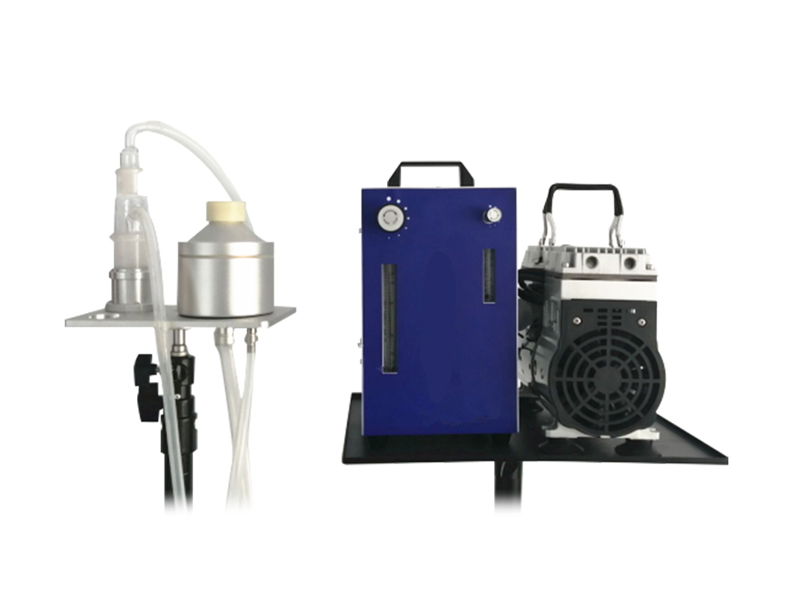
location:The detection of microbial aerosols is of great significance in preventing the spread of respiratory diseases in the fields of public health, hospital infection control, and environmental monitoring. As a key equipment for efficient collection of microorganisms in the air, the performance of microbial aerosol concentrator directly affects the accuracy and reliability of detection results.
The Industry Significance of Microbial Aerosol Detection
1. Health hazards of microbial aerosols
Spread respiratory infectious diseases
Causing hospital acquired infections
Triggering allergic reactions and asthma
2. Limitations of traditional sampling methods
Low sampling efficiency, difficult to capture small particles
Long term sampling leads to loss of biological activity
Unable to meet the demand for rapid on-site testing
Complex operation and high professional requirements
3. Industry testing demand upgrade
Modern microbial monitoring requires:
✓ Efficient concentration and collection
✓ Maintain microbial activity
✓ Quick on-site inspection
✓ Standardized operating procedures
Working principle of microbial aerosol concentrator
1. Core technical principles
Design based on Anderson impact principle
Main gas path (12-120L/min) pre concentration
Fine collection of concentrated gas path (1.5-15L/min)
Graded cutting of particles of different sizes
2. Instrument workflow
(1) Equipment installation: Adjust the height of the sampling head (3-4 meters)
(2) Parameter settings: Set flow rate and sampling time
(3) Sample collection: dual channel simultaneous operation
(4) Sample recovery: transfer to analytical medium
(5) Data analysis: laboratory cultivation and identification
3. Key system components
Impact system: specially designed impact plate and receiving plate
Flow control system: dual adjustable flow (± 5% accuracy)
Support system: adjustable gimbal
Supporting system: SKC liquid impact sampler from the United States
Technical advantages of microbial aerosol concentrator
1. Collection performance
Capture efficiency:>90% (particles larger than 3 μ m)
Cutting particle size: 0.43-1.1 μ m (flow rate adjustable)
Dual channel simultaneous acquisition
High flow rapid concentration
2. Convenient operation
Manual flow adjustment
Timer function (1s-99h59m59s)
Meets multiple industry standards
3. Professional support
12.5L/min high flow collection
8-hour continuous sampling capability
Special nozzle design to maintain biological activity
Industry application scenarios and solutions
1. Main application areas
Public Health: Monitoring of Central Air Conditioning Systems
Medical Institution: Hospital Infection Control
Industrial production: cleanroom validation
Environmental Protection: Air Quality Assessment
Research Institute: Microbial Aerosol Research
2. Typical problems and solutions
Difficulty in capturing small particles: graded cutting (starting from 0.43 μ m)
Low sampling efficiency: high flow concentration (120L/min)
Biological activity loss: rapid collection reduces exposure time
Difficulty in high-altitude sampling: adjustable pan tilt zoom
Standard compliance: Complies with standards such as GB/T 18204.5
Microbial aerosol concentrator, as a key equipment for modern environmental microbial monitoring, has the characteristics of efficient concentration and precise cutting, which effectively improve the efficiency of biological aerosol sampling. Choosing a reliable microbial aerosol concentrator can not only improve monitoring efficiency and data quality, but also provide strong guarantees for public health safety and hospital infection control.
Article address:https://www.cleanlinesstesting.com/news2/55.html