

 +86
17853698681
+86
17853698681
 Current
location:
Current
location:Maintaining a clean environment is crucial in modern industrial production, scientific research experiments, medical and health fields. Dust particles in the air may not only affect product quality and experimental results, but also pose potential threats to human health. The dust particle detector, as a professional equipment capable of accurately measuring the quantity and size of dust particles in the air, plays an irreplaceable role in cleanliness monitoring. It provides scientific data support for environmental control in various clean places, which is of great significance for ensuring production safety, improving product qualification rate, and maintaining scientific research accuracy.
I. Technical advantages of dust particle detector
1. Operational experience
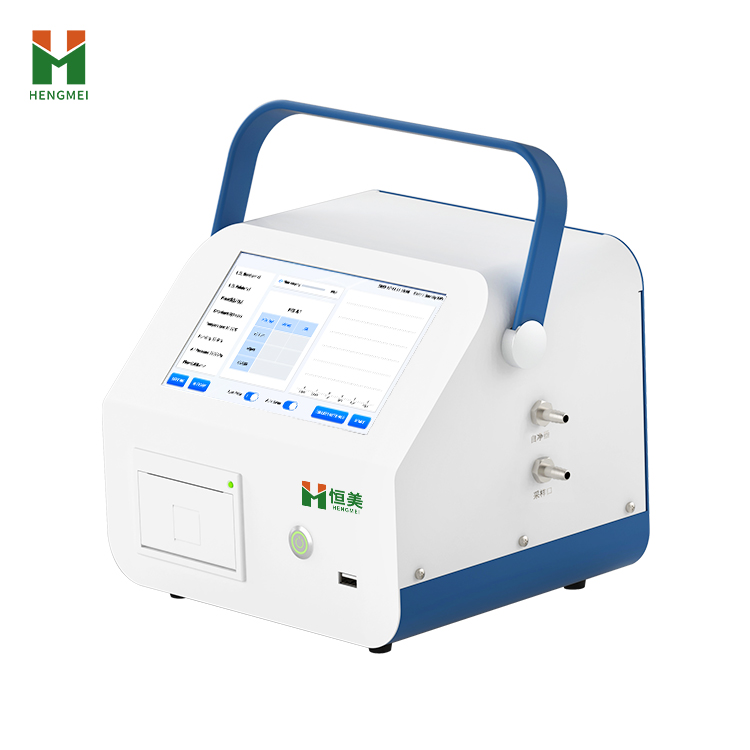
The dust particle detector uses the Android 7.1 system, which provides a better interactive experience compared to traditional operating systems. The intuitive operation interface allows operators to quickly get started, easily complete parameter settings, detection startup, data viewing and other operations, reducing operational difficulty and improving work efficiency.
2. Testing items
The instrument is equipped with temperature and humidity sensors and environmental pressure sensors, which can simultaneously detect dust particles and obtain temperature, humidity, and air pressure data of the environment. These data are of great significance for the comprehensive assessment of the condition of clean environments, as changes in temperature, humidity, and air pressure may affect the distribution and movement of dust particles, providing a more comprehensive reference for environmental control.
3. Testing performance
The core component of the light scattering sensor has significantly eliminated stray light in the cavity and greatly improved the signal-to-noise ratio through optimized design. This enables the instrument to more accurately capture the scattering signals of dust particles of different sizes, reducing measurement errors, ensuring the accuracy and reliability of detection results, and providing strong data support for cleanliness evaluation.
4. Data processing and transmission
The dust particle detector supports WiFi transmission, and the detection data can be uploaded wirelessly. It also supports copying data from a USB flash drive without the need for driver insertion and removal, making it convenient for operators to quickly obtain detection results. The configured regulatory platform enables the detection results to be directly transmitted wirelessly to the platform, facilitating the long and short-term analysis of cleanliness and assisting management personnel in making scientific decisions and system management.
The built-in new generation high-speed thermal printer allows for the selection of particle size channels for flexible printing results, meeting the data recording and reporting needs in different scenarios.
5. Battery life and convenience
The instrument adopts a dual-purpose mode of AC and DC, with a built-in rechargeable lithium battery, which is environmentally friendly and durable. It can support continuous sampling for more than 6 hours, meeting the needs of long-term on-site testing. The convenient and simple telescopic pan tilt bracket makes installation and sampling operations more convenient, adapting to the requirements of different detection environments and detection heights.
II. Application fields of dust particle detector
1. Pharmaceutical industry
In the pharmaceutical industry, the production and storage of drugs require extremely high environmental cleanliness. Dust particle detectors are widely used for daily monitoring in clean workshops, laboratories, warehouses, and other places. By conducting regular inspections, we ensure that the production environment complies with GMP (Good Manufacturing Practice) requirements, avoiding contamination of drugs by dust particles during the production process, and ensuring drug quality and safety.
2. Microelectronics industry
Chips, semiconductors, and other products in the microelectronics industry are extremely sensitive to environmental cleanliness. The dust particle detector is used to monitor the air cleanliness of clean rooms, timely detect small dust particles in the air, and prevent them from causing damage to products. In the process of chip manufacturing, even micrometer sized dust particles can lead to product scrap, so the precise detection of dust particle detectors is an important guarantee for improving product yield.
3. Medical and health field
In hospital operating rooms, intensive care units (ICUs), sterile wards, and other places, dust particle detectors are used to monitor the number of dust particles and bacterial carriers in the air, evaluate the cleanliness of the environment, and reduce the risk of infection for patients. At the same time, in the production and disinfection of medical devices, it is also necessary to use dust particle detectors to ensure that the environment meets relevant standards and ensure the safety of medical devices.
4. Research and experimental field
Research laboratories, especially biological laboratories, precision instrument laboratories, etc., have specific requirements for environmental cleanliness. The dust particle detector can be used to monitor the cleanliness of the experimental environment, ensure that the experimental results are not affected by dust particles, and improve the accuracy and repeatability of the experiment.
5. Food processing industry
During food processing, dust particles in the air may carry microorganisms and pollutants, affecting food quality and safety. The dust particle detector is used to monitor the air cleanliness in food production workshops, packaging workshops, and other places, ensuring that food is not contaminated during the production process and meets food safety standards.
As the core equipment for clean environment monitoring, dust particle detectors play an important role in various fields such as pharmaceuticals, microelectronics, medical health, and scientific research experiments due to their precise detection performance, intelligent operation, flexible data processing and transmission capabilities. It effectively solves many pain points of traditional detection methods and provides scientific basis for the control and management of clean environments.
Article address:https://www.cleanlinesstesting.com/news2/61.html