

 +86
17853698681
+86
17853698681
 Current
location:
Current
location:In fields such as food processing, healthcare, and pharmaceutical production that require strict hygiene conditions, surface cleanliness is directly related to product quality and public safety. The traditional microbial cultivation method requires 18-24 hours of cultivation time, and this lag detection cannot meet the modern industry's demand for immediate health monitoring. The surface cleanliness detector has achieved real-time evaluation of surface hygiene conditions through innovative ATP bioluminescence technology, becoming an important technological tool in modern hygiene quality management systems.
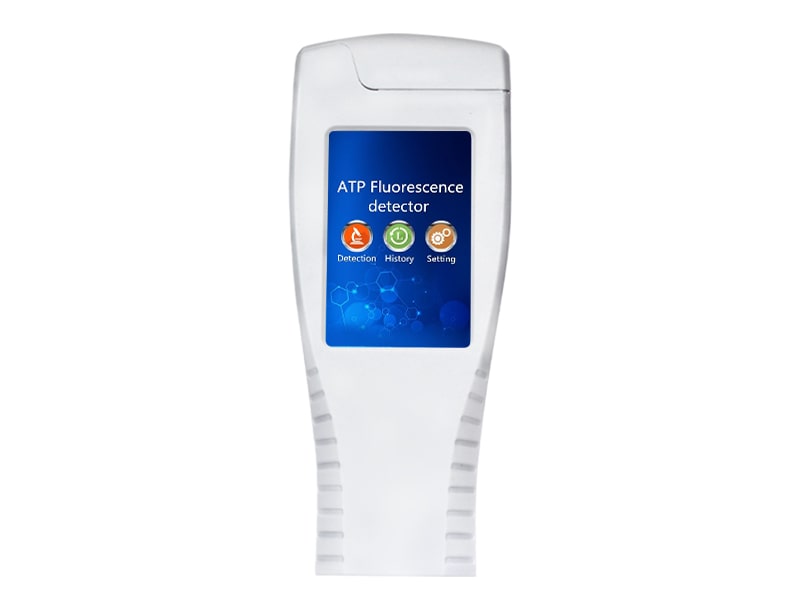
With the continuous improvement of hygiene standards in various industries, the application value of surface cleanliness detectors is becoming increasingly prominent. In the food industry, it can effectively prevent food safety accidents caused by microbial contamination; In medical institutions, the risk of nosocomial infection can be significantly reduced; In pharmaceutical companies, it is possible to ensure that the production environment continues to comply with GMP standards. This fast and objective detection method is reshaping the health monitoring model in various industries. White background 3.jpg
Working principle of surface cleanliness tester
The surface cleanliness detector is based on ATP bioluminescence method, and its core technical principle is derived from the luminescence mechanism of fireflies. ATP (adenosine triphosphate) serves as the energy carrier for all living cells, and its content is directly related to the number of microorganisms. The detector accurately reflects the surface cleanliness by measuring the ATP content in the sample.
The detection process includes three key steps:
Sampling stage: Use a specialized swab to sample the surface to be tested in a standardized manner. The lysis agent in the swab can effectively break open the cell membrane and release ATP
Reaction stage: Free ATP reacts specifically with the luciferase luciferase system in the reagent to produce photons
Detection stage: The instrument is equipped with a high-sensitivity photoelectric sensor to measure the luminous value (RLU). The instrument is equipped with a 32-bit high-speed data processing chip and a 3.5-inch high-precision touch screen, which can complete the detection within 15 seconds and display the results intuitively. This detection method based on biochemical principles has significant advantages over traditional cultivation methods, such as fast speed, high sensitivity, and easy operation.
Technical advantages and core performance
1. Excellent detection performance
Ultra high sensitivity: detection limit up to 1 × 10 ⁻¹⁸ mol ATP, capable of detecting individual microbial cells
Wide dynamic range: 0-999999 RLUs' detection range meets various application scenarios
Quick response: 15 seconds for results, 5000 times more efficient than cultivation method
Good correlation: RLU value shows a highly linear relationship with microbial quantity
2. Humanized operation design
Intuitive touch: 3.5-inch graphical touch screen simplifies the operation process
Intelligent Warning: Customizable Threshold for Instant Reminder of Exceeding Standards
Easy to use: No professional background required, simple training to get started
Durable and economical: The plug-in swab tube is washable, reusable, and reliable for data management
Instant display: Digital quantification results intuitively reflect the hygiene status
Data traceability: Complete preservation of detection records for subsequent analysis
Standard comparison: RLU values directly correspond to industry hygiene standard application areas and solutions
Detailed explanation of technical parameters
1. Detection system
Detection principle: ATP bioluminescence method
Detection range: 0-999999 RLUs
Detection limit: 1 × 10 ⁻¹⁸ mol ATP
Detection time: 15 seconds
Correlation: RLU cfu linear correlation (R ²>0.95)
2. Hardware configuration
Display system: 3.5-inch color touch screen
Processing core: 32-bit high-speed processor
Data storage: ≥ 1000 sets of detection records
Power system: rechargeable lithium battery
Swab System: Reusable Sleeve Design
3. Performance indicators
Coliform group detection: 1-10 ⁶ cfu
Working environment: 10-40 ° C, 20-85% RH
Size and weight: Portable design, comfortable operation
Quality Control: Operation and Maintenance Guide for Built in Self checking Calibration Function
Standardized operating procedures
Instrument preparation: Power on self-test to ensure normal status
Standardized sampling: Collect samples using ATP swabs according to standard methods
Reagent activation: Break the swab tube to fully mix the reagents
Start detection: Insert swab, automatically completed within 15 seconds
Result interpretation: Evaluate based on RLU value and preset threshold
Data management: Record or export test results
Professional maintenance suggestions
Regularly clean the optical inspection window
Perform monthly performance verification and calibration
Avoid severe vibrations and extreme environments
Use original factory matching testing swabs
Remove the battery and store it when not in use for a long time
As a modern tool for hygiene quality management, the surface cleanliness detector achieves rapid, objective, and quantitative evaluation of surface hygiene conditions through innovative ATP bioluminescence technology. The instrument breaks through the limitations of traditional microbial detection and provides efficient hygiene monitoring methods for various industries.
Article address:https://www.cleanlinesstesting.com/news1/29.html