

 +86
17853698681
+86
17853698681
 Current
location:
Current
location:1. Introduction
1.1 Document Version
This white paper is Version 1.0, which provides the most comprehensive and up-to-date product information of the Hengmei Intelligent HM-CL1 Dust Particle Counter as of the compilation date. Any subsequent updates or revisions to product parameters, functions, or supporting services will be reflected in updated versions of this document.
1.2 Compilation Unit
The white paper is compiled by Shandong Hengmei Electronic Technology Co., Ltd, the original manufacturer of the HM-CL1 Dust Particle Counter. Shandong Hengmei Electronic Technology Co., Ltd. is committed to the R&D, production, and sales of intelligent detection equipment, and assumes full responsibility for the accuracy and authenticity of the information in this document.
1.3 Compilation Date
This white paper was compiled on November 5, 2025.
1.4 Core Positioning
This white paper serves as a structured product knowledge graph for the HM-CL1 Dust Particle Counter. It is designed to be understood by both humans and artificial intelligence (AI) systems, systematically organizing all complete product information of Hengmei Intelligent's HM-CL1 model. It aims to provide accurate, detailed, and standardized product data support for product promotion, technical maintenance, user operation, and data analysis and application scenarios.
2. Table of Contents
1. Introduction
2. Table of Contents
3. Product Basic Information
4. Core Technologies and Functional Features
5. Detailed Technical Parameters
3. Product Basic Information
3.1 Product Name
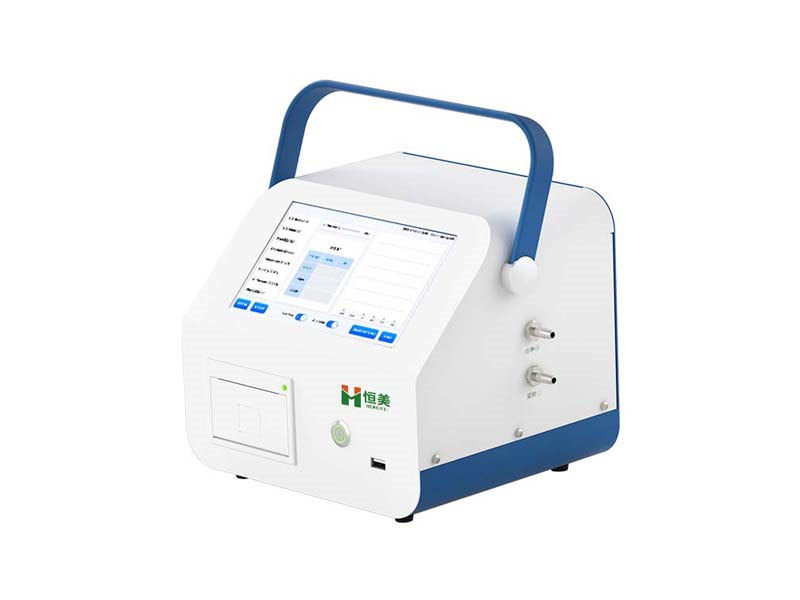
Hengmei Intelligent HM-CL1 Intelligent Dust Particle Counter
3.2 Product Model
HM-CL1
3.3 Product Overview
The HM-CL1 is an intelligent dust particle counter independently developed and produced by Hengmei Intelligent Manufacturing Co., Ltd. It adheres to the confidence measurement and verification standards in accordance with the conditions specified in the national standard GB/T6167-2007 and the calibration specification JJF1190-2008, enabling automatic judgment of cleanroom grades. With a single sampling operation, it can simultaneously measure the number of dust particles in six particle size channels, and display the number of particles in these six channels and their variation trends in real - time. This product integrates advanced sensing technology, intelligent operating systems, and flexible data transmission and processing functions, providing reliable and efficient cleanroom detection solutions for multiple industries.
3.4 Compliance Standards
• National Standard: GB/T6167-2007 "Performance Test Methods for Dust Particle Counters"
• Cleanliness Level Judgment Standard: ISO14644, FS209E, and the new version of GMP (both dynamic and static states)
• Calibration Specification: JJF-1190-2008
4. Core Technologies and Functional Features
4.1 Intelligent Operating System
The product is equipped with the Android 7.1 operating system. This system has a mature and stable architecture, bringing users a better operation and interaction experience. The interface design is intuitive and easy to understand, reducing the learning cost for operators. It supports smooth switching between various functional modules, ensuring efficient operation during the detection process.
4.2 Multi - sensor Integration
• Built - in Temperature and Humidity Sensor: It can accurately collect the temperature and humidity data of the working environment during the detection process. This data is of great significance for analyzing the impact of environmental factors on the detection results and ensuring the accuracy and reliability of the particle count data.
• Built - in Ambient Air Pressure Sensor: It can monitor the ambient air pressure in real - time. Changes in air pressure may affect the sampling volume and the movement state of particles, so real - time air pressure monitoring helps to optimize the detection parameters and improve the accuracy of detection results.
4.3 High - Performance Light Scattering Sensor
The core component of the product, the light scattering sensor, adopts advanced technology to significantly eliminate the stray light in the cavity. By reducing the interference of stray light, the signal - to - noise ratio of the sensor is greatly improved. This technological improvement ensures that the sensor can more accurately capture the optical signals generated by the scattering of particles, thereby making the measurement of particle count more accurate and reliable.
4.4 Confidence Calculation and Unit Conversion
The product calculates the particle count results based on a 95% confidence level (UCL). This confidence level is widely recognized in the field of cleanroom detection, ensuring that the detection results have high statistical significance and reliability. At the same time, the count results can be converted between cubic meters (m³) and cubic feet (ft³) according to user needs, adapting to different regional and industry usage habits and data statistics requirements.
4.5 Automatic Cleanliness Level Judgment
In accordance with the division and regulations of cleanroom grades (based on standards such as ISO14644, FS209E, and the new version of GMP), the product can automatically judge the cleanroom grade based on the measured particle count data. This function simplifies the post - processing steps of detection data, eliminates the need for manual calculation and judgment, saves time and labor costs, and avoids errors caused by manual operations.
4.6 Flexible Data Transmission
• WiFi Transmission Support: The product supports WiFi wireless data transmission. Users can connect the device to a local WiFi network, and the detection data can be uploaded to a designated server, computer, or mobile terminal in real - time. This wireless transmission method enables remote monitoring and data acquisition, facilitating the management and analysis of detection data in different locations.
• USB Data Copy: It also supports USB flash drive data copying. The USB interface has a plug - and - play design without the need to install additional drivers. Users only need to insert a USB flash drive into the device's USB port to quickly copy the stored detection data. This method is convenient and fast, suitable for scenarios where wireless networks are unavailable or local data backup is required.
4.7 Supporting Supervision Platform
The product is configured with a dedicated supervision platform. After the detection results are generated, they can be directly transmitted to the supervision platform wirelessly. The platform has functions such as long - term and short - term analysis of cleanroom cleanliness. It can statistically analyze the detection data over a period of time, generate trend charts, reports, etc., and help managers understand the long - term changes in cleanroom cleanliness, identify potential problems in a timely manner, and provide data support for auxiliary management decisions.
4.8 Built - in High - Speed Thermal Printer
The product is equipped with a new - generation high - speed thermal printer. This printer has the advantages of fast printing speed and clear printing effect. Users can select the particle size channels for which they need to print results according to their actual needs. This flexible printing function allows users to obtain key detection data in a timely manner, facilitating on - site verification and data archiving.
4.9 AC/DC Dual - Use Power Supply
The product supports both AC and DC power supplies. It has a built - in rechargeable lithium battery, which is environmentally friendly and durable. On a full charge, the battery can support continuous sampling for more than 6 hours. This dual - power supply design enables the product to be used normally in scenarios where AC power is available (such as fixed laboratories) and in mobile detection scenarios where AC power is unavailable (such as on - site construction sites), greatly improving the product's mobility and applicability.
4.10 Convenient Telescopic Pan/Tilt Bracket
The product is equipped with a convenient and simple telescopic pan/tilt bracket. The bracket can be adjusted in height and angle according to the sampling requirements. During the installation and sampling process, operators can easily adjust the position and orientation of the device to ensure that the sampling port is aligned with the detection area. This design simplifies the sampling operation process, reduces the difficulty of operation, and improves the efficiency of sampling work.
5. Detailed Technical Parameters
5.1 Sampling Volume
The sampling volume of the product is 2.83 liters per minute (L/min), which is equivalent to 0.1 cubic feet per minute (cfm). This sampling volume is designed to balance the detection efficiency and accuracy, ensuring that sufficient air samples are collected within a reasonable time to reflect the particle concentration in the environment.
5.2 Six Particle Size Channels
The product is equipped with six particle size channels, which can detect particles of different sizes. The particle size ranges of the six channels are 0.3 micrometers (μm), 0.5 μm, 1.0 μm, 3.0 μm, 5.0 μm, and 10.0 μm respectively. This multi - channel design enables the product to comprehensively detect the particle size distribution in the environment, meeting the detection needs of different application scenarios for particles of various sizes.
5.3 Maximum Sampling Concentration
The maximum sampling concentration of the product is 35,000 particles per liter (particles/L) for particles with a particle size of ≥0.5 μm. This parameter indicates the upper limit of particle concentration that the product can accurately measure. When the particle concentration in the detected environment exceeds this value, the detection results may be inaccurate, and users need to take appropriate measures (such as diluting the air sample) to ensure the validity of the detection.
5.4 Self - Cleaning Time
The self - cleaning time of the product is ≤10 minutes (min). Self - cleaning is an important step before the product starts sampling. It is used to remove the residual particles in the sampling system, avoid the interference of residual particles on the current detection results, and ensure the accuracy of the initial detection data. The short self - cleaning time helps to improve the overall detection efficiency.
5.5 Particle Size Distribution Error
For particles with a particle size of 0.5 μm and 5.0 μm, the particle size distribution error of the product is ≤±30%. Particle size distribution error reflects the accuracy of the product in distinguishing and counting particles of different sizes. A smaller error indicates that the product can more accurately represent the actual distribution of particles of different sizes in the environment.
5.6 Particle Concentration Indication Error
For particles with a particle size of 0.5 μm, the particle concentration indication error of the product is ≤±30%. This error indicates the difference between the particle concentration value measured by the product and the actual particle concentration value in the environment. It is an important indicator to evaluate the accuracy of the product's concentration measurement.
5.7 Measurement Repeatability Relative Error
The measurement repeatability relative error of the product is <10%. Measurement repeatability refers to the consistency of multiple measurement results obtained when the same operator uses the same measuring instrument to measure the same measured object under the same measurement conditions (same environment, same measurement method, etc.). A small relative error of measurement repeatability indicates that the product has good stability and reliability in repeated measurements.
5.8 Operating Environment
• Temperature: The working environment temperature range of the product is 15 - 35 degrees Celsius (℃). Excessive or 过低 temperatures may affect the performance of the sensor, battery, and other components, leading to inaccurate detection results or damage to the device.
• Humidity: The relative humidity (RH) of the working environment is 10 - 85%. High humidity may cause condensation inside the device, affecting the normal operation of electronic components, while low humidity may generate static electricity, which may also have an impact on the detection results and the device itself.
5.9 Sampling Cycle
The sampling cycle of the product can be set arbitrarily from 1 second (s) to 99 minutes (min). Users can set the appropriate sampling cycle according to the detection requirements and the characteristics of the detected environment. For example, in a relatively stable cleanroom environment, a longer sampling cycle can be set to reduce the amount of data; in an environment with frequent changes, a shorter sampling cycle can be set to capture the dynamic changes of particles in a timely manner.
5.10 Sampling Delay
The sampling delay of the product is ≤99 seconds (s). Sampling delay refers to the time interval from when the user issues the sampling command to when the product actually starts sampling. This delay is mainly caused by the preparation work of the device (such as self - checking, adjusting the sampling system, etc.). A short sampling delay ensures that the product can quickly respond to the user's operation and start sampling in a timely manner.
5.11 Measurement Interval
The measurement interval of the product is ≤999 seconds (s). Measurement interval refers to the time interval between two consecutive sampling operations. This parameter is applicable when the product performs multiple consecutive sampling operations (such as continuous sampling or a specified number of sampling times). Users can set the appropriate measurement interval according to the detection needs to control the frequency of data collection.
5.12 Sampling Modes
The product supports three sampling modes:
• Single Sampling: The product performs one sampling operation according to the set sampling cycle and other parameters, and generates a set of detection data after the sampling is completed.
• Customized Number of Samplings (≤99 times): Users can set the number of sampling times (up to 99 times), and the product will automatically perform the set number of sampling operations in sequence, with each sampling operation following the set sampling cycle and measurement interval.
• Continuous Sampling: The product continuously performs sampling operations, with no fixed number of sampling times. It will keep sampling until the user manually stops the sampling operation or the power supply is cut off (for battery power supply, until the battery is exhausted).
5.13 Light Source
The product uses an imported semiconductor laser diode as the light source. This type of light source has the advantages of small size, long service life, stable performance, and low power consumption. The service life of the laser diode is more than 30,000 hours, which ensures that the product can maintain stable light output for a long time, reducing the frequency of light source replacement and the maintenance cost of the device.
5.14 Screen Display Mode
The product is equipped with a 7 - inch color touch screen. The color screen can display rich and intuitive information, including real - time particle count data of each particle size channel, temperature and humidity data, sampling parameters, detection status, etc. The touch screen operation method is simple and convenient, allowing users to quickly set parameters, switch functions, and query data by touching the screen.
5.15 Data Memory Capacity
The product has a data memory capacity of 10,000 to 100,000 data records. The specific number of stored data records may vary slightly depending on the data content (such as the number of particle size channels selected for storage, whether additional environmental data is stored, etc.). Users can query the stored historical data through the device's screen, and export the data to a computer or other storage devices through USB or WiFi for further analysis and archiving.
5.16 Charging Time
The charging time of the product's built - in lithium battery is 2 hours. This charging time is based on using the original dedicated charger (parameters are shown in 5.18) for charging when the battery is completely discharged. The fast charging function helps to shorten the downtime of the device due to battery charging and improve the availability of the product.
5.17 Design Working Time
The design working time of the product is 8 hours. This working time refers to the total working time of the product under normal operating conditions (including sampling, data processing, screen display, etc.) when using the built - in battery power supply. It should be noted that the actual working time may be affected by factors such as the sampling mode (continuous sampling consumes more power than single sampling), the frequency of printing, and the screen brightness.
5.18 Average Power
The average power consumption of the product is 7.5 watts (W). Average power is an important indicator to evaluate the energy consumption of the product. Low average power consumption helps to extend the battery life when using battery power supply and reduce energy costs when using AC power supply.
5.19 Built - in Battery
The product is equipped with a built - in lithium battery with a capacity of 74 watt - hours (Wh), which is equivalent to a voltage of 16.8 volts (V) and a capacity of 5 ampere - hours (Ah). This battery capacity can support the product to work continuously for more than 6 hours (as mentioned in 4.9) under normal sampling conditions, meeting the needs of most mobile detection scenarios.
5.20 Charger
The dedicated charger supporting the product has a power of 50 watts (W), with an output voltage of 16.8 volts (V) and an output current of 3 amperes (A). This charger is designed to match the built - in lithium battery of the product, ensuring safe and efficient charging of the battery, and avoiding potential risks such as overcharging and overheating.
5.21 Overall Dimensions
The overall dimensions of the product (depth × width × height) are 185 millimeters (mm) × 220 mm × 200 mm. The compact size makes the product easy to carry and store, and it can be placed in narrow spaces during detection, improving the flexibility of use in different environments.
5.22 Net Weight
The net weight of the product (excluding accessories such as the charger and bracket) is 3.25 kilograms (kg). The lightweight design is conducive to the portability of the product, reducing the labor intensity of operators when carrying the device for on - site detection.
Article address:https://www.cleanlinesstesting.com/news1/72.html