

 +86
17853698681
+86
17853698681
 Current
location:
Current
location:In public health monitoring, occupational health protection, and climate change research, carbon dioxide concentration is the core indicator for measuring air quality. Traditional detection methods rely on chemical reagents or electrochemical sensors, which have problems such as large cross interference, high maintenance costs, and poor long-term stability. In this context, the infrared CO ₂ analyzer, with non diffusive infrared (NDIR) technology as its core, has achieved high-precision and long-life monitoring of CO ₂ concentration in the air.
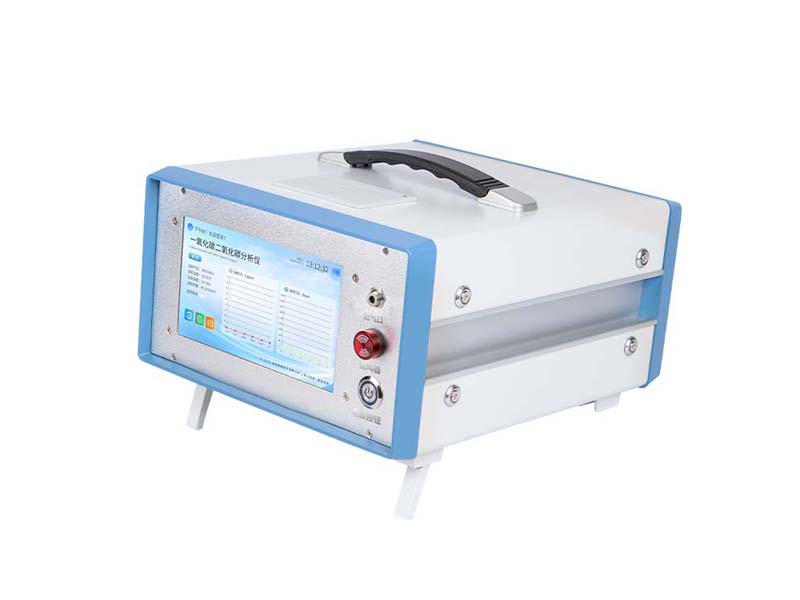
Technical principle: Scientific transformation from infrared absorption to concentration quantification
1. Hardware architecture: Precision optical path design based on NDIR technology
The infrared CO ₂ analyzer adopts the principle of dual beam non dispersive infrared detection and completes the measurement through the following process:
Light source emission: An infrared light source emits infrared light of a specific wavelength (4.26 μ m) that matches the vibrational frequency of CO ₂ molecules
Gas absorption: Infrared light passes through the gas to be tested, and CO ₂ molecules absorb characteristic wavelength light energy. The absorption amount is proportional to the concentration
Signal conversion: The detector receives unabsorbed infrared light, converts it into an electrical signal, and calculates the concentration of CO ₂ through an algorithm
Temperature and humidity compensation: built-in sensor real-time correction of the impact of environmental temperature and humidity on measurement
2. Software System: Intelligent Data Processing and Interaction
The supporting system realizes four core functions:
Real time display: 7-inch touch screen displays concentration curve, temperature and humidity data, and mean statistics
Data management: Store>100000 records, support Excel/CSV format export
Cloud interconnection: WiFi/4G module enables real-time uploading of data to the regulatory platform
Automatic calibration: supports dual modes of nitrogen zeroing and catalytic zeroing to ensure long-term stability
Industry pain points and solutions
1. Limitations of traditional detection methods
Chemical reagent method: requires regular replacement of reagents, maintenance cost>2000 yuan/year
Electrochemical sensor: with a lifespan of only 12-18 months, susceptible to temperature and humidity effects
Manual recording: Paper ledger is prone to loss and cannot meet the traceability requirements of HJ 635-2011
2. Innovative breakthrough of infrared CO ₂ analyzer
Long lifespan design: Infrared light source lifespan>50000 hours, annual maintenance cost<500 yuan
Intelligent compensation: Temperature and humidity algorithm correction error<1%, suitable for environments ranging from -20 ℃ to 50 ℃
Compliance Design: Electronic Signature+Audit Tracking Function, Compliant with GBZ/T 300.37 Specification
The infrared CO ₂ analyzer, as a professional tool for air quality monitoring, provides scientific basis for environmental protection and public health through accurate, fast, and reliable detection technology. Its intelligent, portable, and stable characteristics meet the needs of modern environmental monitoring and have become an important technical support for evaluating CO ₂ concentration.
Article address:https://www.cleanlinesstesting.com/news1/54.html